
The Lights were Offensive
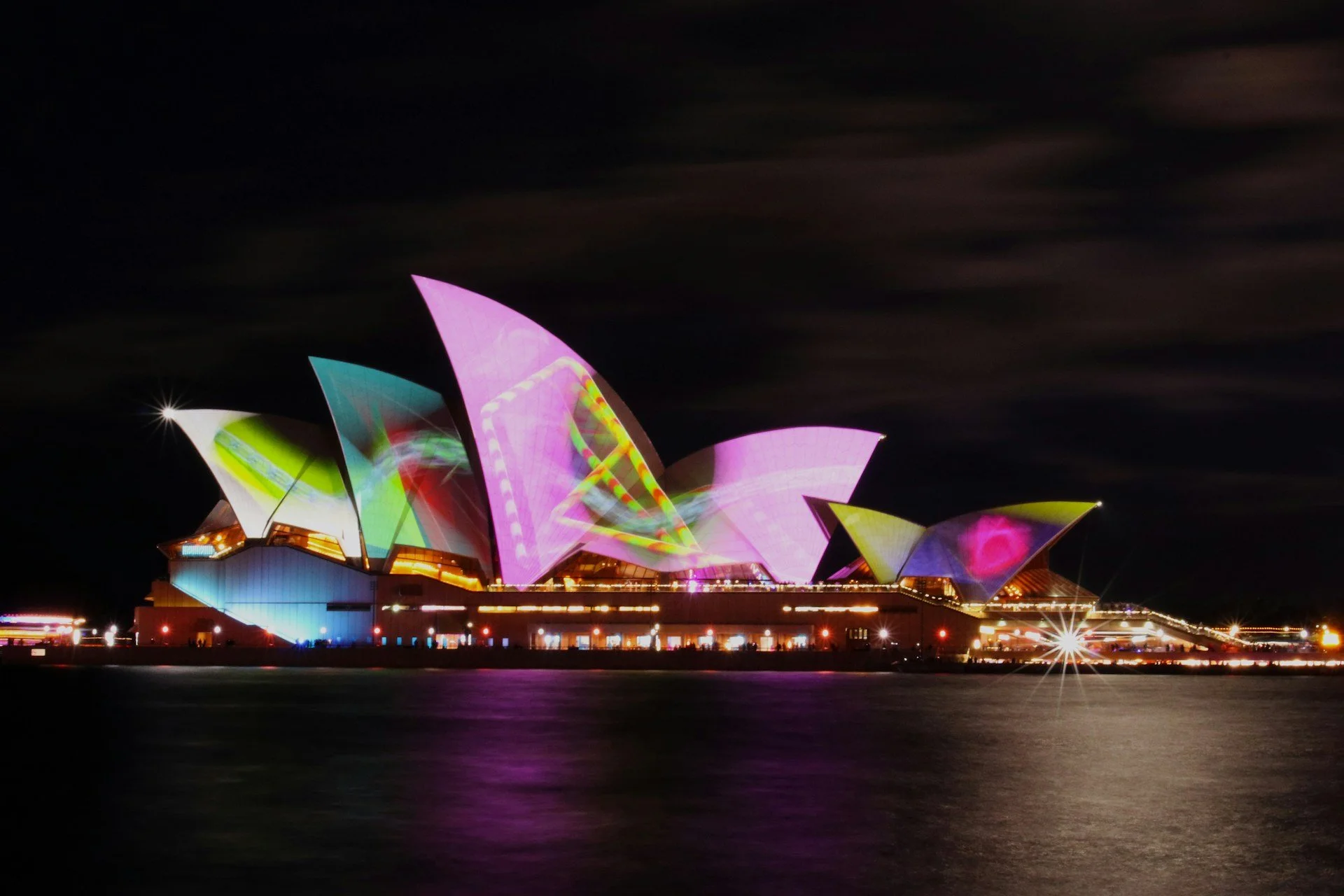
Vivid Sydney Opera House …Unsplash
INTRODUCTION
In April of 2022, an artistic duo, namely, Zammitt and Stolk, projected pro-cannabis lights and imagery onto the Sydney Opera House and Harbour Bridge to advocate for a change in the NSW driving laws for medicinal cannabis patients.[1] This guerrilla tactic cost them almost two years of trial before the prosecution dropped all charges. This innocuous act of projecting lights onto a building in dead in the night to put forth a positive message for law reform attracted great scrutiny from the government. This shows that the state’s anxiety about menial disorder leads it to criminalise absurdity, even when it is absurdity that drives political critique. This brings us to the question - when does art in public risk becoming a crime?
LEGAL SIDE
When art steps into the public domain, it enters a place policed not only by aesthetics, but by the Summary Offences Act 1988, and its provisions, restricting offensive conduct.[2] In these provisions lies a test of reasonability where the person must have a ‘reasonable excuse’ for why they acted as they did; at the time of arrest, the judge of this alleged reasonability is the police.[3] This objective test gives the police broad discretion to make of the art what they want to, and the power to stop the artists at their whims. Looking at it closely drives us to the conclusion that the absurd subjectivity of art is tolerated in galleries and installations, but outlawed on the streets.
Zammitt and Stolk’s projection was essentially a victimless crime. There was no damage. No protest. No trespass. Just the projection of light. But for nearly two years, the case dawdled in the courts, unable to determine the punishment for a harmless crime. The dropped charges were an admission that in order to maintain discipline, public order law criminalises creativity.
COMMUNICATIONAL ART
Art often operates on the principle of subjectivity, and works through metaphors. These metaphors like the aforementioned one, frequently use silent, symbolic acts in order to deliver a message of the bigger picture. This broader perspective usually aims to engage in political discourse. As established in Lange, the law must not unnecessarily halt communication about political matters, yet the court’s narrow understanding of ‘political communication’ often overlooks symbolic art that aspires to evoke emotion rather than mere arguments.[4]
Performance art and the law both rely on symbols and the communication of those symbols. Yet, this symmetry is neither respected nor acknowledged. Courtrooms and art galleries are both performative platforms. Art encourages interpretation, law solidifies closure. The same symbolistic art that leaves connoisseurs contemplating, is the one that leaves the legal system scrutinizing, waiting to ask which rule has been breached. Installations like those of Zammitt and Stolk’s prod the scope of artistic expression, and the law system’s response draws the boundaries out in ink.
THE PHILOSOPHY OF AN OFFENCE
Ultimately this art projection just ends up reminding us that law’s discomfort with art isn’t usually about danger or damage, but instead about controlling the narrative presented. Public order law, like more instruments of state power, appreciates neat and defined meanings. Art thrives when these meanings are blurred and obscured.
The same sails of the Opera House and the structure of the Harbour Bridge that project light and showcase art during Vivid Sydney, are considered off-limits when it comes to projecting art as a form of non-verbal political communication showcasing a simple question - ‘who are we hurting?’. The irony writes itself.
REFORM AND REINTERPRETATION
Society at large could greatly benefit from revisiting the ostentatious judicial interpretation of a bifurcating art into the box of public offence. Something offensive must be looked at narrowly in light of the implied freedom that we enjoy, especially when it comes to art that intends to engage in a discussion detailing contemporary political issues that affect mundane lives majorly. NSW could take inspiration from the US Bill of Rights’ Amendment 1 that protects art when it conveys a message, and the European Convention on Human Rights that protects artistic freedom as an expansion of the freedom to expression, and identify art as a means of expression rather than of insult.[5]
Art is meant to mirror society, and when it does so in such a beautiful manner, then criminalising it would be equivalent to limiting the views and opinions of the citizens of a country. Performance art doesn’t seek to mock law, it just seeks to improve it, and it’s high time we started treating it like that.
━━━━━━━━━━━━━━━━━━━━━━━━━━━━━━━━━━━━━━━━━━━━━━━
[1] Emily Wind, ‘Artistic duo in Sydney cannabis laws protest ‘vindicated’ as prosecutors drop charges’, The Guardian (Web Page, 9 February 2024) <https://www.theguardian.com/australia-news/2024/feb/09/sydney-opera-house-harbour-bridge-cannabis-protest-court-case-dropped-activists>.
[2] Summary Offences Act 1988 s 4.
[3] Ibid s 6.
[4] Lange v Australian Broadcasting Corporation (1997) 145 ALR 96 [112].
[5] David Leichtman and Avani Bhatt, ‘Federal Courts and the Communicative Value of Visual Art: Is an Intended Message Required for Strong Protection of Rights Under the First Amendment?’ [2011] Federal Lawyer 25, 29; The Human Rights Act 1998 (UK), s 12 .